

Stylish Golf Pants for Professional Golfers: A 2026 Guide
Table of Contents
- Why Professional Golfers Need Stylish Golf Pants That Perform
- The Golf Trousers Fit Guide: Finding Your Correct Size
- Slim Fit Golf Trousers: A Modern Cut That Moves With You
- Stretch Golf Trousers: Fabric Technology for Freedom of Movement
- Dress Codes and Tournament Regulations: What You Can Wear
- Best Golf Trousers for Men: Selection Criteria and What to Avoid
- Weather and Seasonal Selection: Choosing the Right Weight
- Conclusion: Building a Wardrobe That Works On and Off the Course
- Frequently Asked Questions
Last Updated: October 12, 2026
Why Professional Golfers Need Stylish Golf Pants That Perform
Stylish golf pants for professional golfers no longer compromise between looking sharp and playing well. This guide from Fareva Golf breaks down fit, fabric, dress codes and seasonal choices.
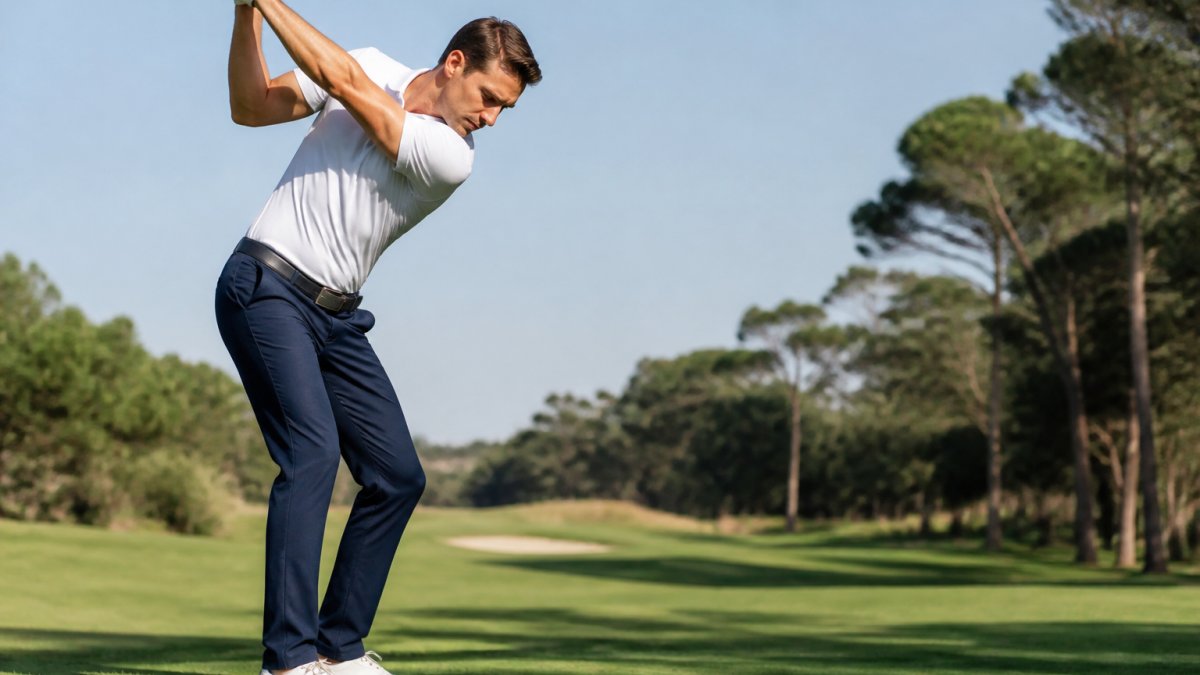
Stiff, shiny golf trousers are over.
Most guides treat style and performance as separate decisions. They're not.
Below, we'll show you how to match fit, fabric and cut to the way you actually play.
The Golf Trousers Fit Guide: Finding Your Correct Size
The right fit starts with two measurements: your waist and your inseam. Most golfers wear trousers one size too loose in the waist and too long in the leg.
Waistband and Rise: The Foundation of a Good Fit
An active waistband with a little give is the single best upgrade you can make. It flexes as you bend into your stance and keeps your shirt tucked.
A common mistake is buying a waistband that only fits when standing still. Sit down, then twist. If it digs in, size up.
Inseam and Leg Length: Getting It Right First Time
Leg length decides whether a trouser reads as tailored or borrowed. A slight break over the shoe looks modern; a full pool looks dated.
Measure your best-fitting smart trousers and match that inseam. When in doubt, a half-inch shorter looks sharper than a half-inch longer.
| Fit | Best For | Look |
|---|---|---|
| Slim | Lean builds, modern dressers | Close, tapered leg |
| Tapered | Most body types | Roomier thigh, narrow ankle |
| Relaxed | Larger frames, hot weather | Straight, easy drape |
| Neat | Office-to-course wear | Trim but not tight |
Slim Fit Golf Trousers: A Modern Cut That Moves With You
Slim fit golf trousers are cut close through the thigh and taper toward the ankle, suiting lean and athletic builds with the cleanest silhouette.
The catch: cheap slim trousers use stiff fabric that pulls across the knee when you crouch to read a putt. Look for a woven fabric with built-in stretch.
For women golfers, slim cuts need a different pattern, not a scaled-down men's trouser. A proper women's cut accounts for hip-to-waist ratio, which is why unisex sizing often fits badly.
Stretch Golf Trousers: Fabric Technology for Freedom of Movement
Stretch golf trousers use woven fabrics blended with elastane or similar fibres so the cloth recovers its shape after every swing. This separates a trouser you can play in from one you merely look good in.
Freedom of movement comes down to the amount of stretch and its direction. Two-way stretch flexes across the body; four-way stretch flexes both ways, which matters most through the hips and knees.
Moisture-Wicking and Temperature Regulation
Moisture-wicking finishes pull sweat away from the skin so it evaporates rather than soaking the fabric, while breathable weaves let heat escape.
Fabric weight drives temperature regulation: a lightweight, breathable trouser keeps you cool in July, while a heavier brushed fabric holds warmth on a cold morning.
Dress Codes and Tournament Regulations: What You Can Wear
Most golf clubs and tournaments require tailored trousers, not denim, cargo pants or tracksuit bottoms.
Dress codes vary: a private club may insist on a specific colour palette, while a pro-am may allow brighter tones.
For professional golfers, the practical rule is simple: a tailored cut in a conservative colour for competition days, brighter colours and modern styles for practice and social rounds.
Best Golf Trousers for Men: Selection Criteria and What to Avoid
Choosing the best golf trousers for men comes down to four checks: fit, stretch, fabric weight and construction. If you play competitively, the bar is higher than general men's golf apparel guides set, because you are judged on appearance while asking the fabric to survive a full tournament day.
What Professional Golfers Prioritise That Recreational Players Don't
Tournament players rank requirements differently from casual golfers. The priorities most commonly cited are:
- A full, unrestricted hip and knee turn. A trouser that pulls across the thigh at the top of the backswing will change your swing, not just your look.
- A waistband that stays put through 18 holes of walking. Shirts must stay tucked without constant adjustment, because adjusting your shirt between shots reads as untidy on camera.
- Crease retention. Trousers that wrinkle badly after a few holes look creased for the rest of the round, and there is no changing room on the course.
Fit Guidance by Body Type and Movement
Fit is not one-size-fits-all: rise, thigh width and leg opening all interact with your build and swing.
| Body type | Recommended rise | Recommended leg opening | Notes |
|---|---|---|---|
| Lean / athletic | Mid rise | Tapered, narrow ankle | Slim cuts work well; check knee pull in the putting stance |
| Average build | Mid rise | Tapered or neat | The most forgiving combination for most players |
| Broader thighs or seat | Mid to high rise | Straight or relaxed | Avoid slim cuts that pull across the thigh at the top of the backswing |
| Taller frame | Mid rise | Straight, longer inseam | Check that the hem does not rise above the shoe in the follow-through |
| Shorter frame | Mid rise | Tapered, shorter inseam | A slight break over the shoe reads as tailored; a pool of fabric reads as borrowed |
A practical test: take your normal golf stance, then your putting crouch, then a full follow-through. If the fabric pulls tight across the kneecap, digs into the waist, or rides up at the ankle, the cut is wrong regardless of the size on the label.
Inclusive Sizing and Tailoring
Off-the-peg sizing rarely fits everyone, and inseam and waist options vary between brands, so treat the label as a starting point. Two tailor adjustments are worth the cost:
- Hemming to length. A half-inch shorter looks sharper than a half-inch longer, and a clean hem improves the drape of the whole trouser.
- Taking in the waist. If the waist is slightly loose but the thigh and seat fit well, a tailor can take in the waistband without disturbing the cut.
If you are between sizes, size up and tailor down rather than sizing down and hoping the fabric stretches. Stretch fabric recovers its shape; it does not create room never cut into the pattern.
What to Avoid
- Rigid fabrics with no stretch, which restrict your hip turn
- Waistbands that dig in when you bend
- Overly long inseams that pool over the shoe
Durability and Care: Making Your Investment Last
Construction decides how long a trouser lasts. Look for reinforced seams at the seat and inner thigh, a secure zip fly, and a waistband that keeps its shape after washing.
Care is straightforward: wash cool, turn inside out, and skip the tumble dryer, which breaks down stretch fibres. Hang to dry and your trouser keeps its fit far longer.
R&A Rules of Golf and amateur status guidance
Weather and Seasonal Selection: Choosing the Right Weight
Match fabric weight to the season and you stay comfortable all year. One pair will not cover every condition, and for professional golfers the calendar makes this harder: you may play a heatwave one week and a cold, damp links course the next.
The practical answer is a small rotation built around fabric weight, with layering doing the rest of the work.
Warm Rounds: Heat and Humidity
For warm rounds, choose a lightweight, breathable weave in a lighter colour. Light colours reflect heat and hide the chalky sweat marks darker fabrics show.
Players in hot conditions often prioritise breathability over stretch, then rely on a slightly looser cut through the thigh for freedom of movement. If you run hot, a tapered rather than slim cut often performs better than a tighter trouser in the same fabric.
Cold Mornings: Insulation Without Bulk
For cold mornings, a heavier brushed fabric with some wind resistance holds warmth without bulk. Brushing raises a soft inner nap that traps warm air, and wind resistance matters more than thickness on exposed courses, because wind strips warmth faster than still air.
Layering is key: a base layer under a mid-weight trouser extends its comfortable temperature range considerably, which is cheaper and more flexible than buying a separate winter trouser.
Wet Conditions: Water Repellency and Drying Time
For wet conditions, a water-repellent finish keeps light rain from soaking through. Two things matter more than the finish:
- Drying time. A trouser that dries quickly is more useful than one that repels water well but stays heavy and damp for the rest of the round.
- How the finish is maintained. Water-repellent finishes degrade with washing and with detergent residue. A technical wash or a re-proofing treatment restores performance, and skipping fabric softener helps the finish last longer.
For heavy, sustained rain, no trouser fabric replaces proper waterproof over-trousers. Treat water-repellent golf trousers as a light-rain and drizzle solution, not a substitute for waterproofs.
Wind: The Overlooked Variable
Wind is the condition most golfers under-prepare for. A windproof layer over a mid-weight trouser is often more effective than a heavier trouser alone, because it stops the air movement that carries heat away. On exposed links, that combination covers more conditions than a single heavy pair.
Building a Rotation for a Competitive Calendar
The smartest approach is a small rotation: one lightweight pair for summer, one mid-weight pair for spring and autumn, one warmer pair for winter, plus a windproof or water-repellent outer layer.
If you play competitively, check the forecast, the course and the event's dress code before you pack. A rotation is only useful if every pair in it complies with the rules of the events you actually play.
Conclusion: Building a Wardrobe That Works On and Off the Course
The real challenge is finding golf trousers that perform on the course and still look right at dinner. That is exactly what Fareva Golf designs for, with course-to-street pieces blending performance, comfort and modern style.
Our collection is built for golfers who want a fresh perspective on golf apparel, with versatile pieces suited to every round and life beyond the course. Explore the range and add to cart.
Frequently Asked Questions
What brand of golf pants do pro golfers wear?
Professional golfers wear a range of premium brands, but the common factor is performance fabric. Look for golf pants with a high stretch content, moisture-wicking properties, and a tailored fit that allows a full range of motion. Many pros choose trousers with an active waistband and a modern tapered leg. The specific brand matters less than the construction: four-way stretch, breathable material, and a fit that stays in place through the swing are what separate course-ready pants from standard chinos.
How should golf trousers fit for a professional look?
Golf trousers should fit close to the body without being tight. The waistband should sit comfortably at your natural waist, with enough room to move but no gaping. The leg should taper slightly from knee to hem, avoiding excess fabric that catches the wind or restricts your swing. A slim or tapered fit works well for most body types. Check that you can squat and rotate your torso without the fabric pulling. If you can see wrinkles radiating from the crotch or waist, the fit is too tight.
Are stretch golf trousers suitable for professional golfers?
Yes. Stretch golf trousers are now the standard for professional golfers because they allow a full range of motion during the swing. Look for fabrics with at least 15-20% elastane or a mechanical stretch weave. This lets the trousers move with you rather than against you. Stretch also helps the trousers keep their shape after hours of wear. The best stretch golf trousers combine flexibility with a structured look, so they still appear sharp for the clubhouse or a post-round meal.
Can you wear chinos as golf trousers?
You can wear chinos on the course, but they are not ideal for competitive play. Standard chinos are usually made from cotton twill, which absorbs sweat, restricts movement, and stays wet. Performance golf trousers use synthetic blends with stretch and moisture-wicking finishes. If you play casually, a well-fitted pair of chinos can work. For 18 holes or tournament play, choose purpose-built golf trousers. They will keep you cooler, drier, and more comfortable from the first tee to the final putt.